
Concrete patio construction in Tracy CA - a slab that sheds rain away from your house
Patio cracked, sinking or holding puddles by the back door? We pour a new slab that slopes away from your house.
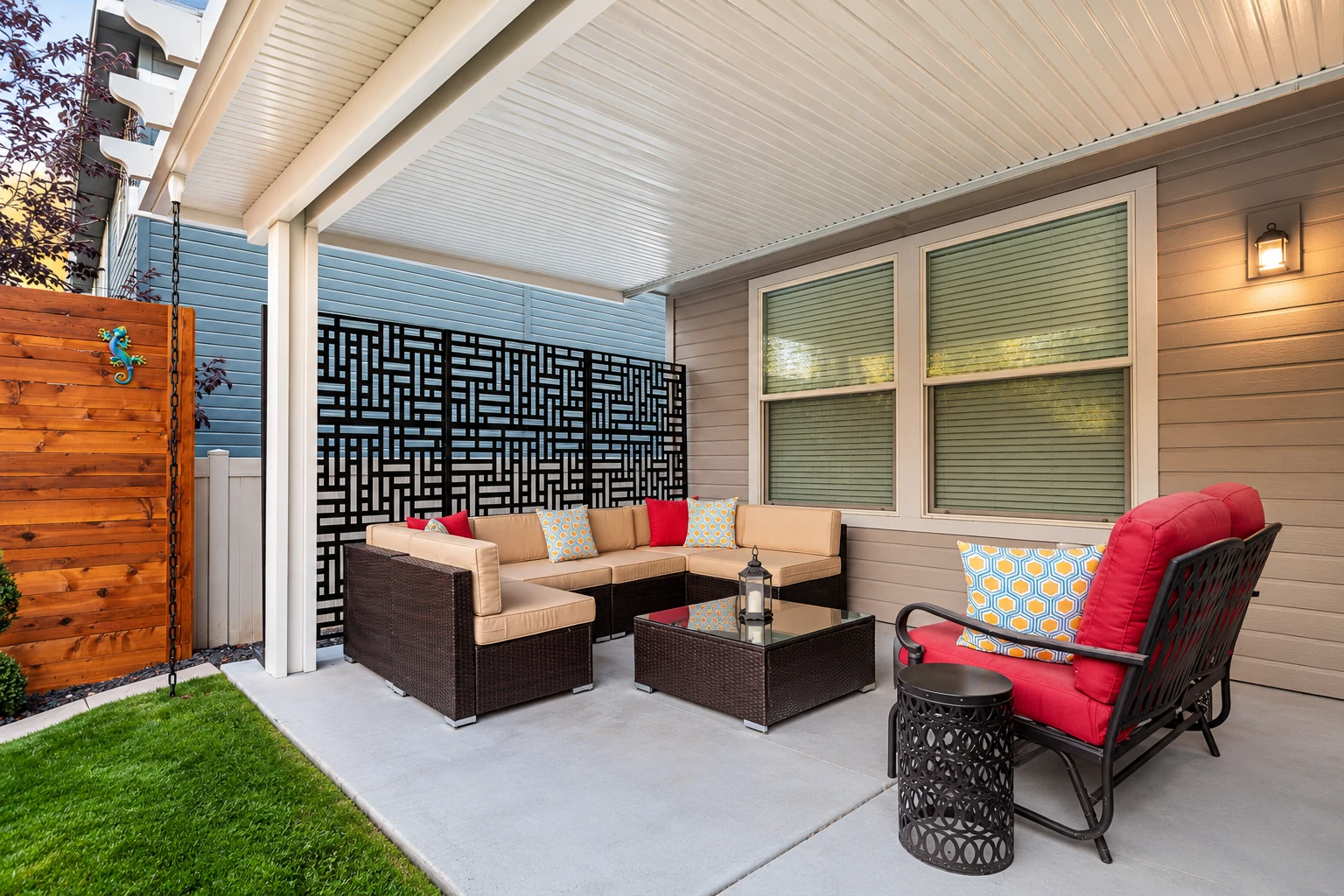
What goes into building a concrete patio in Tracy?
Concrete patio construction in Tracy means our crew forms, pours and finishes a flat concrete slab behind your house. We slope it so rain runs off into the yard instead of soaking in along your walls.
Most people who call us have a patio that's cracked, has sunk at one corner or sends water toward the back wall, or they have a bare yard they'd finally like to use. The price moves mostly with the size, whether an old slab has to come out first, how much steel goes in and whether you want plain concrete or stamped concrete. The schedule turns on whether a permit is involved, the weather on pour day and the curing time, which is the wait while the concrete hardens before you put weight on it. We're based in Tracy and build patios here and in the cities around it, including Manteca, Stockton, Livermore and Dublin, and a lot of homeowners add a concrete sidewalk while we're set up. The written estimate I give you lists each part of the job, so you see your own figure before anything starts.
How do you know your patio needs replacing?
A patio usually tells you when it isn't working, through cracks, low spots or water sitting where it shouldn't. These are the signs homeowners point out to me most often on a first visit.
Cracks that wander across the slab usually mean the joints were skipped or cut too late.
One corner or edge sitting lower than the rest usually means the base underneath has settled.
Puddles that linger after rain, or water running toward the back wall, mean the slope is wrong.
A top that dusts, flakes or chips often goes back to a rushed finish or a poor cure.
A step or lip where the patio meets the house or a walk has become a tripping spot.
Bare dirt out back that turns to mud after rain is space you could be using.
If your patio sends water toward the foundation, please call rather than wait, because that's the problem I'd want to look at before anything else.
What happens when you call us about a patio?
Here's how a patio job runs with us, from your first call to the final walk-through, so you know who you'll talk to and what you'll have in hand before we pour.
Call or send the form
Call (209) 237-1118 or send the form with a few lines about your yard. I'll set a time to come out and see it in person.
I measure and write it up
I listen to what you have in mind, take measurements and settle the slope first, so rain runs away from the house. You get a written estimate that lists each part of the job, and if a permit or inspection is involved, we plan it in from the start.
Our crew forms and pours
Our own crew digs out, packs the base, sets the forms, pours and finishes, with me on site, and on hot days we pour early in the morning or in the evening because midday heat can leave the top weak. The joint lines go exactly where you and I marked them before the pour.
We walk the patio together
I walk the finished patio with you before we pack up, so you can see the slope and the joints for yourself. After that it needs its curing time before furniture or a grill goes on it, and I'll tell you what to expect for your slab.
Get a written estimate for your new patio
We'll reply within one business day to set a time. Then I come out, measure and give you a free written estimate, part by part, with no obligation to go ahead.
- Call
- (209) 237-1118
- Hours
- Mon–Fri: 8 AM–11 PM, Sat–Sun: 6 AM–10 PM
The base and steel under your new patio
We dig out to firm ground and pack a solid base over the subgrade, the soil the slab rests on, because a slab poured on raked, loose dirt sinks as that dirt settles. When a budget gets tight, the base is the first thing people want to cut, since nobody sees it once the concrete is down. I'd rather make the patio a little smaller or keep it plain than skimp underneath.
Rebar, steel bar laid in a grid inside the slab, helps hold the concrete together if the ground moves under it. Reinforced concrete costs more than plain, so at the estimate we talk about whether your patio needs it, based on its size, what will sit on it and how the yard drains. If it goes in, you'll see it listed on its own, so you know what it adds.
Concrete patio questions from Tracy homeowners
How much does a concrete patio cost near Tracy?
A concrete patio in the Stockton area usually costs about $6 to $12 per square foot, which is the going rate in the area rather than our own price. Stamped concrete runs higher than plain, and tearing out an old slab adds cost on top of the new pour, so mention any old patio when you call. Your written estimate shows your own figure part by part, and we offer satisfaction guaranteed on every job.
Who can pull a permit for a patio in Tracy?
The City of Tracy issues permits to the owner of the property or to a state-licensed contractor who also holds a City of Tracy business license. If you'd rather act as owner-builder, the city has you fill out a property owner disclosure form and present it before or when the permit is issued, and I'll explain what they'll ask of you. When we're the contractor, we take care of the application and the inspections, and if it's unclear whether your patio needs a permit, we check with the city before we start.
What license should a concrete contractor have in California?
The state's C-8 concrete license is the one that covers forming, pouring, placing and finishing flat concrete work like a patio. The state only lets unlicensed workers take jobs under $500 in total, labor and materials included, and a patio that's part of a bigger yard project loses that exemption. We're licensed and fully insured.
Why should my patio slope away from the house?
A patio within 10 feet of your foundation should slope down and away from the house, so rain runs off into the yard instead of against your walls. Concrete doesn't soak water up, and fixing the grade after the pour is hard and expensive, so the slope is the first thing I settle on every patio.
What causes cracks in a new concrete patio?
New concrete cracks mainly because it shrinks as it dries, so the goal is to have those cracks follow lines you chose. Control joints are cut lines that make a weak spot in the slab, which gives a crack a set place to form, and we mark them with you before the pour. Joints can't make up for a poor base, too much water, a thin slab or a rushed cure, so ask any contractor how they prepare and pack the soil.
How long does it take to build a concrete patio?
The time depends mostly on the patio's size, whether an old slab comes out first and whether a permit is involved. After the pour, the slab needs its curing time before you load it up. I go over the timing for your patio when I write the estimate.
Other concrete work that goes with a patio
Stamped concrete services
If you'd like more than a plain slab out back, stamped concrete adds a pressed pattern, and we can price it beside plain concrete in the same estimate.
Concrete sidewalk building
A solid path from the driveway or side gate makes a new patio easier to reach, and it's easy to pour while our crew is already there.
Tell us the size of your patio
Call (209) 237-1118 or use the form with the patio's rough size in square feet and whether an old slab has to come out, so I arrive with a plan for your yard.
Mon–Fri: 8 AM–11 PM, Sat–Sun: 6 AM–10 PM