Stamped concrete services in Tracy CA - a slate, brick or stone look you can walk on
Plain gray patio or a walkway that looks tired? We pour and stamp concrete that looks like slate, brick or stone.
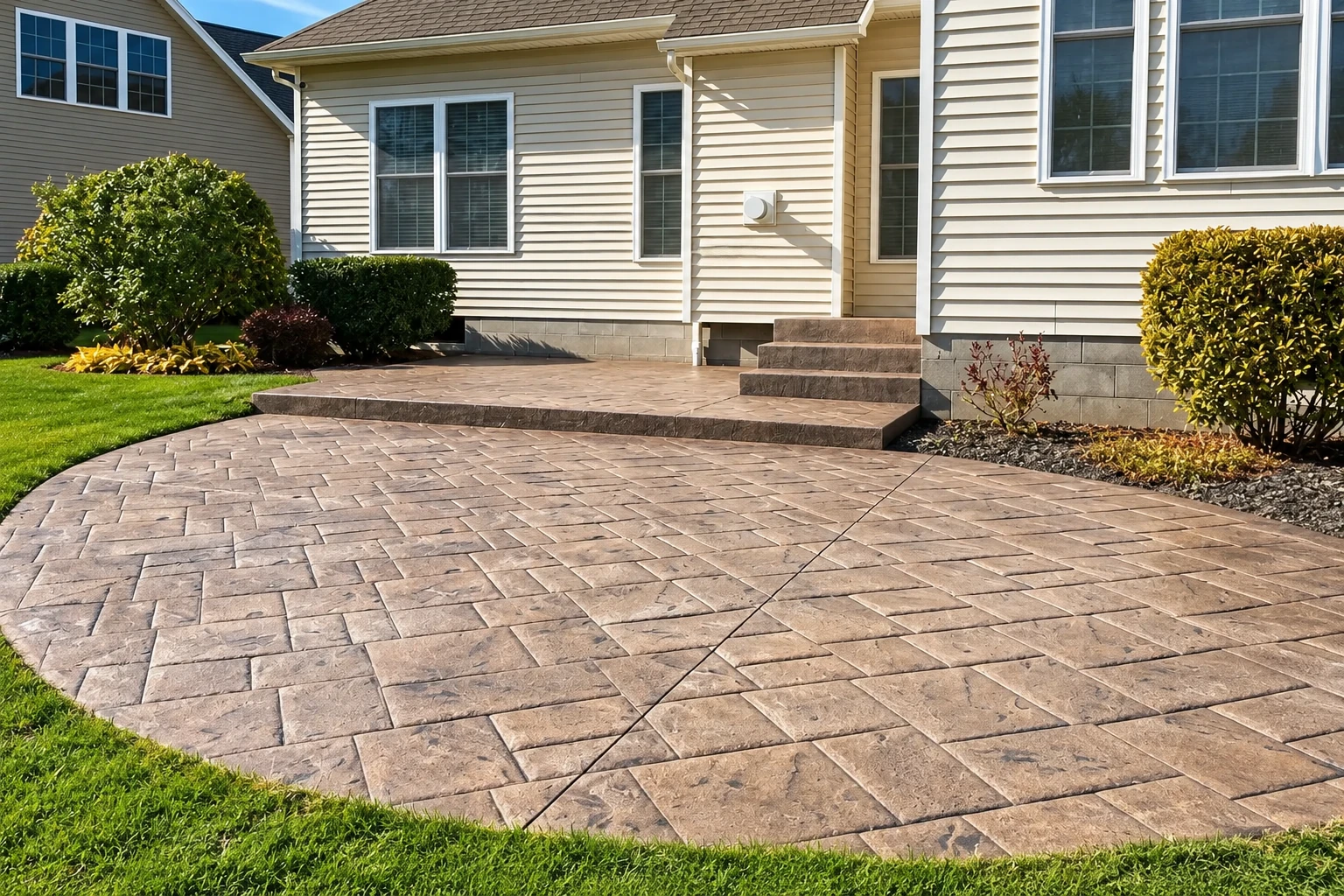
What does stamped concrete involve for a Tracy patio?
Stamped concrete services in Tracy, CA mean we pour a new patio, walkway or other flatwork, the flat concrete around your house, then color it and press in a pattern so it looks like slate, brick or natural stone.
Most people who call us have a plain gray patio, a cracked slab or bare dirt out back, and they want something that looks like stone but is poured as one solid surface. The price comes down to the size of the area, how much old concrete has to come out, the pattern and colors, the sealer and whether we add rebar, the steel bars that help hold a slab together. The schedule turns on the weather, the wait while the concrete cures and, if the work reaches the public sidewalk the way a stamped front walk or a new concrete sidewalk can, a city permit, which we apply for and see through inspection. Your estimate puts a figure on each part, written out line by line.
How do you know it's time for a new stamped slab?
Most calls come for one of two reasons. Either the old slab has failed, or the concrete is sound but the look isn't. These are the things homeowners usually notice first.
Your old patio has cracked or sunk in spots, which usually means it's time to tear out and repour.
Water pools on the slab or runs toward the house, a sign the slope was never set right.
Brick or paver walks have shifted and sprouted weeds, and you'd rather have one solid surface.
The color on your stamped concrete has gone flat and chalky, which usually means the sealer has worn thin.
Water soaks in instead of beading up, so spills and stains are getting into the surface.
The top is flaking or turning dusty, which often points to a rushed pour or poor curing.
A faded finish can wait for a reseal, but a slab that's sinking or sending water toward your house is worth a call now.
What happens when you call us about stamped concrete in Tracy?
I started this business in Tracy in 2017, and we work across the cities around it, including Manteca, Stockton, Livermore and Dublin. Here's how a stamped job runs from the first call to the walkthrough.
Call or send the form
Call (209) 237-1118 or send the form with the rough size of the area, the look you want and whether the work reaches the sidewalk or street. That tells me what to look at and whether a permit question needs sorting out early.
I visit, measure and write it up
I come out myself to see the site, hear what you have in mind and take measurements, and we settle on the look and the sealer together. Your written estimate breaks the job into its parts so you know what you're paying for, and any permit or inspection is built into the plan from the start.
Our crew forms, pours and stamps
Our own crew sets the forms, pours, colors and stamps the slab while I oversee the work, and we cut control joints, shallow grooves that give the slab a planned place to crack. Then it needs time to cure, the wait while the concrete hardens and gains strength, and we'll tell you when it's ready for foot traffic.
Walk the job, then seal later
I walk the finished job with you before we pack up. Sealing is its own visit, once the slab has cured enough to take it.
Get a written estimate for your stamped patio or walkway
Send the form and we'll reply within one business day to set a time. I'll come out, measure and give you a free written estimate, part by part, with no obligation to go ahead.
- Call
- (209) 237-1118
- Hours
- Mon–Fri: 8 AM–11 PM, Sat–Sun: 6 AM–10 PM
Patterns, color, sealer and the base underneath
The look comes first, and it's usually slate, brick or natural stone, pressed into the surface with textured mats while the concrete is still soft. Color can go in two ways. Integral color is pigment added while the concrete is mixed, so the color runs through the whole slab, and a second color worked in on top gives the shading you see in real stone.
Sealer is the other choice that changes how the finished slab looks, so we talk it through before the pour. A topical sealer, a film that sits on top, is the most common pick because it deepens the color, while most penetrating sealers soak in and guard against water and stains without darkening anything. If you want rich color, go topical, and if protection matters more than shine, a penetrating sealer is worth weighing.
Under the pattern sits the subgrade, the base the slab rests on, and nobody sees it on day one. That's usually the first thing people want to trim when a budget gets tight, and it's the one I won't cut, because a base that was only raked level settles with the dirt. We dig out, pack the base and slope it away from the house, the same groundwork we put under a garage floor.
Stamped concrete questions we hear in Tracy
How much does a stamped concrete patio cost near Tracy, CA?
A stamped concrete patio in Stockton, just up the road, usually costs about $9 to $17 per square foot, and that's the going market range, not our quote. Reinforced concrete runs slightly more per square foot than unreinforced, and the pattern, colors, sealer and any tear-out move you around within that range. Your own figure comes from the written estimate after I've measured the site.
How long do you wait before sealing new stamped concrete?
New stamped concrete gets sealed once it's fully cured or cured far enough to take the sealer, and the industry standard for a full cure is 28 days. The real wait depends on where you are, the time of year and the sealer, so we plan sealing as a separate visit after the pour. Putting a topical sealer on too soon or too thick can spoil its look, so it's fair to ask any crew when and how heavily they apply it.
How often does stamped concrete need to be resealed?
Reseal when water stops beading up or the color starts looking flat, not on a set calendar. Resealing every year just to keep a high gloss can cause problems of its own, so plan on an occasional reseal instead. A good time is when the slab will be cooling, not warming, for 3 to 4 hours afterward, which sometimes means doing it in the evening.
When does Tracy require an encroachment permit for concrete work?
Tracy requires an encroachment permit for work in the public right-of-way or on city-owned property, such as where a walk or apron meets the sidewalk or street. The city's list names driveway construction rather than stamped concrete, so it doesn't settle every backyard job, and when it's unclear we check with the city's Building Division at (209) 831-6400 before we start. When a permit applies, we handle the application and the inspections.
Do I need a licensed contractor for a stamped concrete patio in California?
California lets an unlicensed person take on only small jobs up to the state's $1,000 minor work limit, and only when the job needs no permit and they hire no one to help. Anyone selling a contractor's work at your home also has to be registered with the state licensing board as a home improvement salesperson, whatever the contract amount, so it's fair to ask to see it. We're licensed and fully insured, with satisfaction guaranteed on every job.
What causes a new stamped concrete patio to crack?
Most early cracks come from a base that was raked level instead of dug out and packed, control joints cut late or skipped, or a pour in the midday heat that leaves a weak, dusty top. That's why we pack the base, time the pour around the heat and cut the joints on schedule. If a crack does show up, it usually follows a joint, where the pattern hides it.
Related concrete work around your house
Concrete sidewalk building
If your stamped patio needs a path to the front door or side yard, a plain or matching walk ties it together and keeps people off the lawn.
Garage floor concrete
If the garage slab is cracked, stained or flaking, a new floor gives you a sound, easy-to-sweep surface to park on and work over.
Start planning your stamped concrete patio
Call (209) 237-1118 or send the form, and if you've seen a patio you like, save a photo, because a look you can point to makes the color and pattern talk go faster.
Mon–Fri: 8 AM–11 PM, Sat–Sun: 6 AM–10 PM