
Concrete steps construction in Tracy CA - built to the height your door needs
Cracked, sinking or pulling-away steps at your door? We measure the rise, choose poured or precast with you and build steps that sit right.
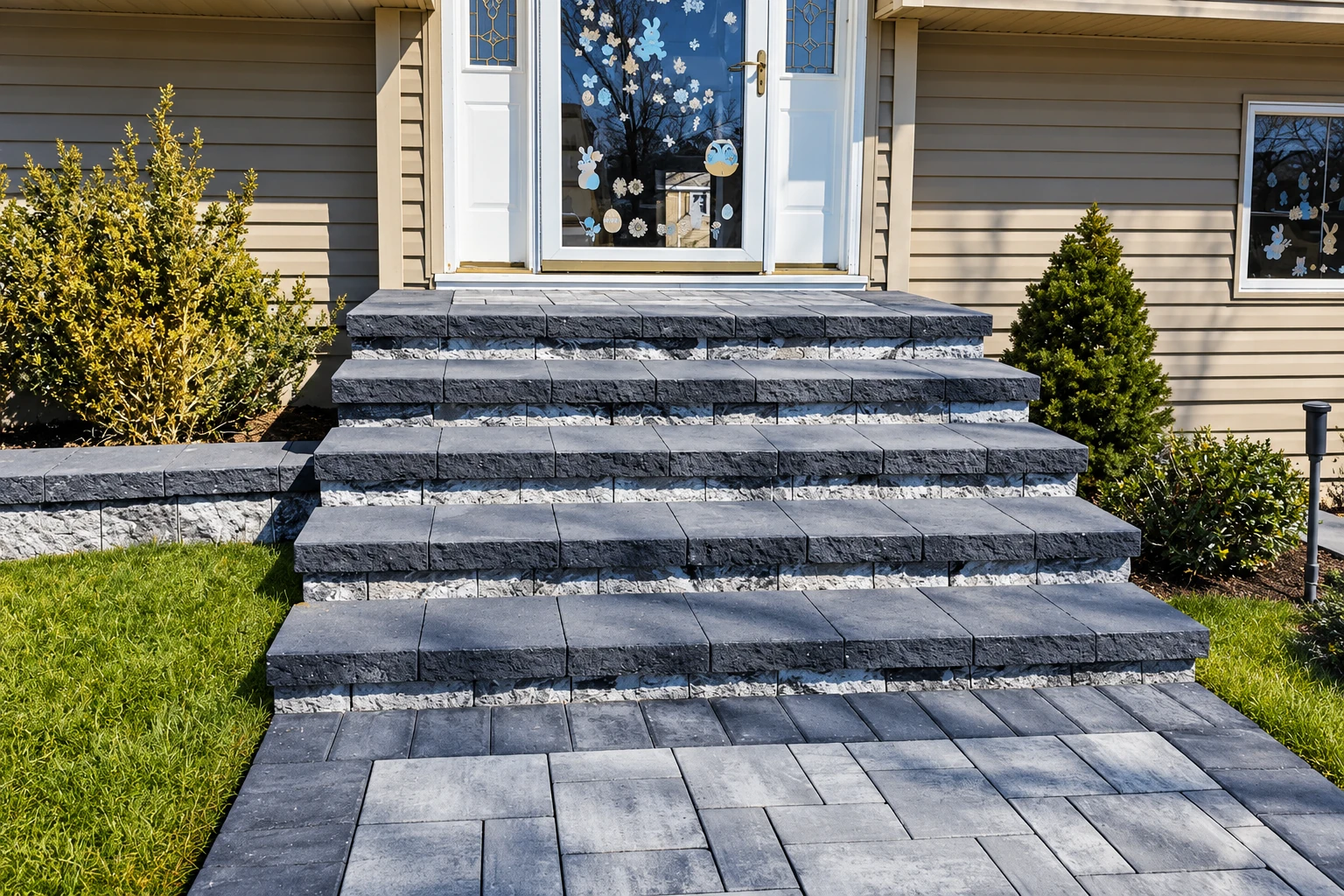
What goes into building new concrete steps in Tracy?
Concrete steps construction in Tracy, CA means building you a new set of entry steps. Our crew either forms, pours and finishes them on site, or sets precast steps made in standard sizes. The right choice depends on the rise, which is the height the steps climb to your door, and on what the new steps have to join.
Most people call when the old steps have cracked, sunk or pulled away from the door and they've started watching their footing. The price moves with how high the steps climb, how many there are, whether they tie into an existing slab and how much old concrete we break out and haul away first. The schedule turns on whether we pour or set precast, and on the days the concrete needs to cure. Forming, pouring and finishing concrete is work the state licenses concrete contractors to do, and we're licensed and fully insured. If the steps are part of a bigger job, we plan them alongside the slab foundation building or foundation installation so everything ties in, and I'll put your own figure in a written estimate that lists each part of the job.
How do you know your front steps need replacing?
Steps usually show trouble long before they fail outright. These are the things homeowners notice most, and what each one usually tells us about the ground underneath or the way the steps were built.
A gap has opened between the top step and the house, which usually means the steps are settling.
The steps tip forward or lean to one side, usually because they sit on fill that was never packed.
Cracks run where the steps meet the house, often because they were poured tight against it.
The front edges chip and crumble, which usually points to a weak, dusty top from a rushed pour.
Water pools on the treads or runs back toward your door, so the steps have lost their slope.
A step rocks or sounds hollow underfoot, usually because the ground beneath it has washed out.
If a step rocks, has pulled away from the house or has a broken edge someone could catch a foot on, it's worth calling now rather than waiting.
What happens when you call us about new steps in Tracy?
Here's how a step job runs with us, from your first call to the walk-through. I come out myself and our own crew does the building, so you deal with the same people the whole way.
Reach us by phone or form
Call (209) 237-1118, email info@tracycaconcrete.com or send the form, and we'll set a time to meet at your house.
I measure and talk it through
I listen to what you have in mind, measure the rise and look at what the steps will tie into, then tell you honestly whether precast or poured in place makes more sense. You get a written estimate that lists each part of the job, so you know what you're paying for before anything starts.
We plan permits, then build
If a permit or inspection is involved, we plan it in from the start. Our crew forms, pours and finishes the steps or sets the precast, and I'm on site to oversee the work.
Walk the finished steps together
Before we pack up, I walk the finished steps with you and go over how the concrete will be cured over the next few days. Satisfaction guaranteed on every job.
Get a written estimate for your new concrete steps
Send the form and we'll reply within one business day to set up a free visit at your property. I'll measure, talk it through with you and write the estimate out part by part, with no obligation.
- Call
- (209) 237-1118
- Hours
- Mon–Fri: 8 AM–11 PM, Sat–Sun: 6 AM–10 PM
Base, steel and joints in a poured step
Poured steps start with the ground. We dig out and pack the subgrade, the soil the steps sit on, because steps set on raked, loose fill settle with the dirt and pull away from your door. You won't see that work once the concrete is down, and it's the last thing I'd cut to save money, since a nice finish can't fix steps that sink.
Inside the forms, rebar, the steel bars that hold concrete together if it cracks, ties the treads and the landing into one piece. We give the treads a broom finish, a light brushed texture so shoes grip when the steps are wet. Where the steps meet the house, we leave a joint so the steps and the foundation can move on their own.
Concrete steps questions from Tracy homeowners
Are poured or precast concrete steps cheaper?
Precast steps can cost less when your rise matches one of their standard sizes, and one cost guide notes that poured steps cost more because of the forming labor. The same guide says poured steps suit a height that falls between precast sizes or steps that have to meet an existing slab. I'll tell you which one your house calls for once I've measured.
What is the best time of day to pour concrete steps in summer heat?
Early in the day is best, outside the hottest hours. A national concrete group's hot-weather guidance warns that high heat, strong wind and low humidity dry fresh concrete fast and can cause shrinkage and early cracks, and it says to finish the surface without sprinkling water on it. We plan our pours to stay out of the midday heat whenever we can.
How long does it take for new concrete steps to cure?
The same hot-weather guidance calls for curing to start as soon as finishing ends and to continue for at least 3 days. Curing means keeping water in the concrete so it doesn't dry out too fast, so plan for the new steps to stay under wet burlap and plastic, a curing compound or a water spray through that time.
Do I need a permit to build concrete steps in Tracy, CA?
That isn't settled for every step job, so when it's unclear we check with the city before we start, and when a permit is needed we take care of the application and the inspections. If the work reaches into the public right-of-way, the city-owned strip where driveway approaches and sidewalks sit, Tracy requires an encroachment permit. The city's Development Engineering Division answers encroachment questions at (209) 831-6400 or encroachment@cityoftracy.org.
Can a homeowner pull a building permit in Tracy, or does the contractor have to?
Either can, because Tracy issues building permits to the owner of a residential property or to a state-licensed contractor with a valid City of Tracy business license. If you'd rather act as owner-builder, the city asks you to complete its property owner disclosure form and present it before or when the permit is issued, and I'll explain what else they'll ask of you.
What causes concrete steps to crack and pull away from the house?
Most often the steps are settling on a base that was never packed, or they were poured tight against the house. One guide notes that steps poured with no isolation joint, a filled gap between the steps and the foundation, pass settling stress into the house slab and crack both, and that the joint adds little cost. That's why we leave one on every set we pour.
Foundation work that ties into new steps
Slab foundation building
When steps lead up to a new addition, the slab under that room has to be packed, level and ready before new steps can tie into it.
Foundation installation
Building a new home or addition means the foundation goes in first, and planning the entry steps with it saves tearing out concrete to make them fit later.
Book a time to measure your steps
Call (209) 237-1118 or use the contact form, and if you can, tell us roughly how high your steps climb and whether they meet an existing slab so I come prepared.
Mon–Fri: 8 AM–11 PM, Sat–Sun: 6 AM–10 PM